Why it matters
Living off the land.
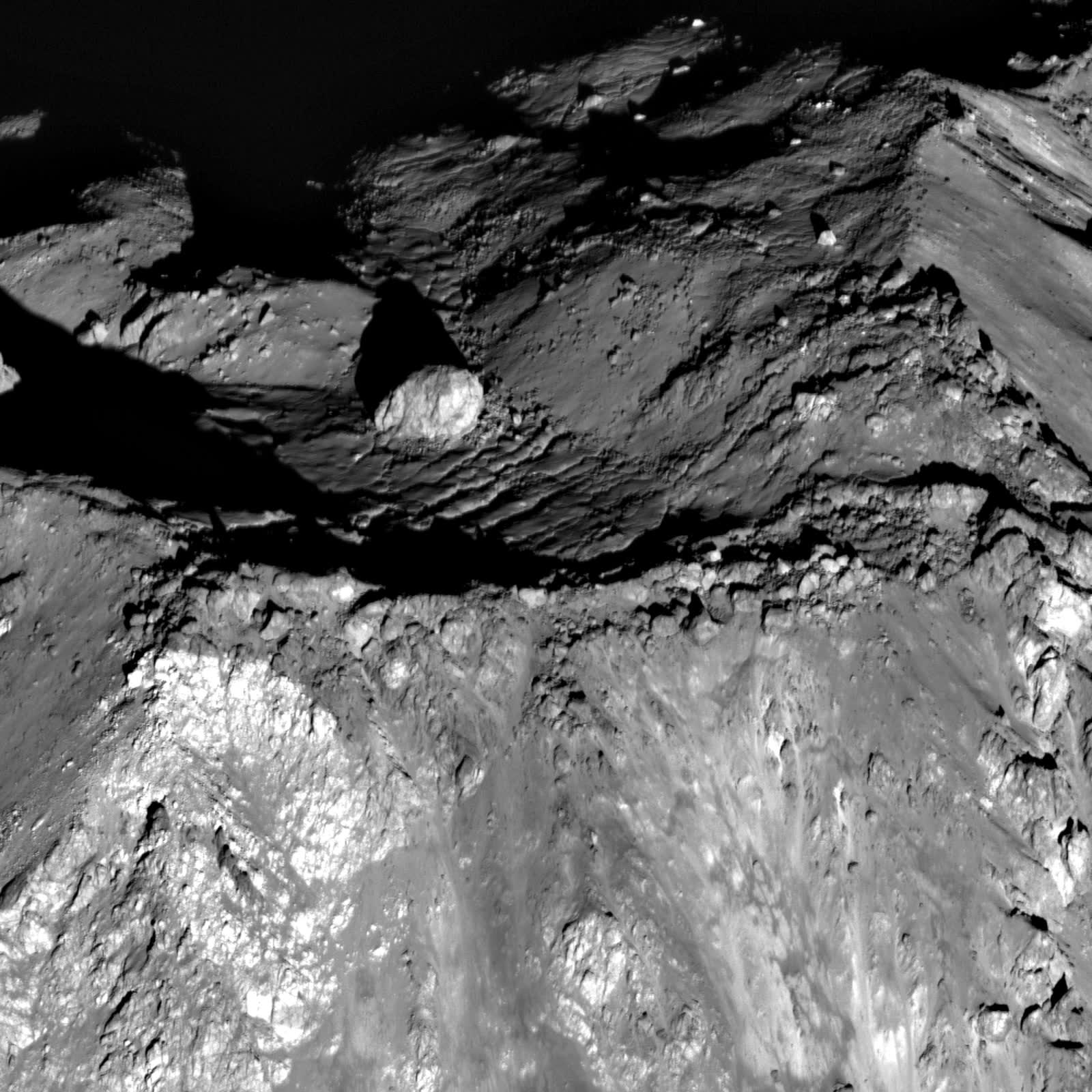
Water ice in permanently shadowed polar craters, oxygen bound in regolith and metals in the soil are the difference between a supplied outpost and an economy. In-situ resource utilization (ISRU) turns local material into propellant, breathable air and building stock.
Resources are the layer with the longest timeline and the largest payoff, and the one most dependent on everything above it working first.
The difference between an outpost and an economy is what you can make where you are.
Inside this layer
6 building blocks
Prospecting
Mapping where volatiles and useful minerals actually are, at the resolution needed to plan extraction.
Excavation
Digging, hauling and handling regolith with machines that survive dust, cold and low gravity.
Water
Extracting and purifying ice from shadowed regions, the foundation for propellant and life support.
Oxygen
Producing oxygen from regolith oxides or water for breathing and for oxidizer.
Metals
Iron, aluminum, titanium and silicon recovered from regolith for construction and manufacturing.
In-situ resource utilization
The processing chain that turns raw material into propellant, air, water and building material at scale.
Connect the stack
Dependencies
Rather than evaluating companies in isolation, we look for dependencies between infrastructure layers, and ask what must exist before the next layer can scale.
This layer depends on
This layer enables
Across every layer
Questions we are watching
Open questions
- How much water is really accessible, and at what energy cost per kilogram?
- Which comes first, propellant from the Moon or a customer who will buy it there?
- What legal and standards framework governs extraction and ownership?